
-DQG-c1Ek.png)
Technical Article
Marine Main Engine Overhaul: Complete Technical Guide
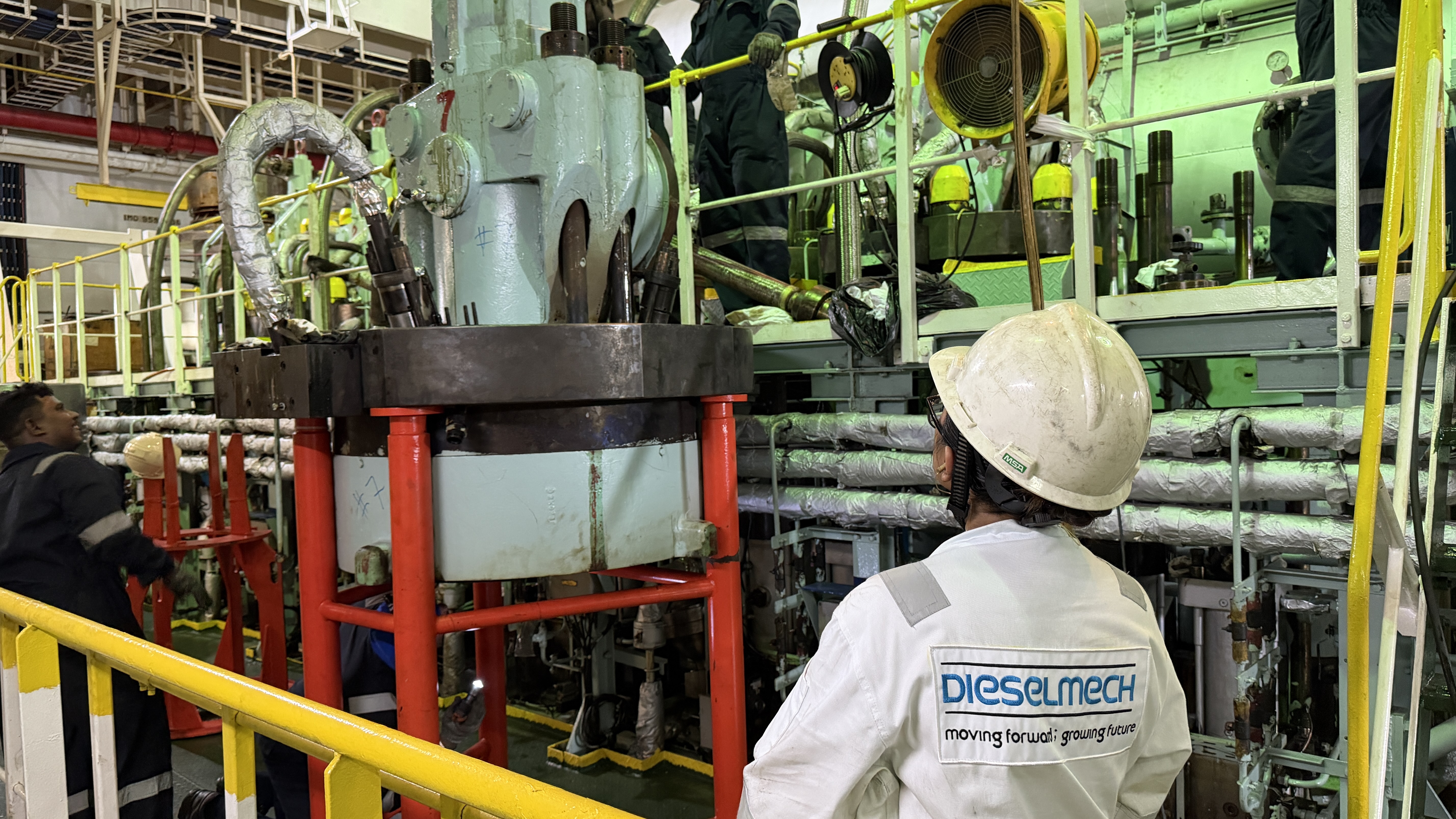
A marine main engine overhaul is a planned and controlled maintenance scope for restoring the condition of major combustion, sealing, bearing, and running components. On large low-speed two-stroke marine diesel engines, the work typically includes pre-overhaul assessment, safe isolation, dismantling, cleaning, detailed inspection, dimensional measurement, repair or reconditioning, controlled reassembly, post-overhaul testing, and final technical reporting. The exact scope must always follow the engine maker's manual, service bulletins, class requirements, vessel procedures, and the actual condition found during inspection.
What is included in a main engine overhaul?
A marine main engine overhaul is more than opening a cylinder unit and renewing worn parts. It is a structured technical process used to confirm whether critical components can continue in service, require adjustment, need workshop reconditioning, or must be renewed. For a two-stroke main engine overhaul, the work usually focuses on the cylinder unit, combustion components, exhaust valve, fuel injection equipment, piston assembly, cylinder liner, piston rod and stuffing box, crosshead arrangement, bearings, crankshaft condition, scavenge space, and associated lubrication systems.
The scope may be planned from running hours, class survey requirements, maker maintenance intervals, abnormal operating trends, or condition-based findings. In practice, most main engine overhaul work combines planned maintenance with condition assessment, because dismantling often reveals wear patterns, deposits, leakage marks, fretting, scuffing, cracks, or bearing distress that cannot be fully confirmed while the engine is assembled.
| Scope area | Included work | Purpose |
|---|---|---|
| Pre-overhaul review | Review running hours, operating history, alarm history, previous overhaul records, cylinder performance, drain oil condition, and known defects | Confirm the planned scope, identify abnormal symptoms, and prepare inspection priorities before dismantling |
| Preparation and isolation | Risk assessment, shutdown, starting-air and fuel isolation, turning gear engagement, cooling system isolation where required, lifting preparation, tooling, cleanliness, and component identification | Make the job safe, controlled, traceable, and compliant with vessel procedures |
| Dismantling and cleaning | Open the planned cylinder unit, remove major components, clean carbon deposits, preserve identification marks, and protect machined surfaces | Expose the true component condition and prevent damage during handling |
| Component assessment | Inspect the cylinder cover, exhaust valve, injector equipment, piston crown, rings, liner, piston rod, stuffing box, crosshead bearing, crankpin bearing, main bearings, crankshaft, guide shoes, scavenge space, and lubricating system | Determine whether components can be reused, adjusted, reconditioned, machined, honed, calibrated, or renewed |
| Measurement and acceptance review | Record liner wear, ovality and taper, ring and groove clearances, bearing clearances, journal condition, crankshaft deflection where applicable, exhaust valve condition, and fuel injector test results | Compare actual condition against maker limits, service bulletins, vessel history, and class requirements |
| Reassembly and testing | Clean inspection before installation, renewal of required sealing elements, controlled tightening, lubrication, adjustment, timing checks where applicable, turning checks, starting, load-up, monitoring, and reporting | Confirm correct operation and provide traceable overhaul documentation for future maintenance planning |
Why a main engine overhaul is performed
The main objective of a marine diesel engine overhaul is to preserve safe and reliable propulsion. A low-speed two-stroke main engine operates with high thermal load, high combustion pressure, large bearing loads, and long operating periods. Even when the engine is running acceptably, liners, piston rings, exhaust valves, injectors, bearings, stuffing boxes, guide shoes, and lubricating systems gradually develop wear or deposits that must be inspected before they become operational failures.
Typical overhaul triggers include scheduled running hours, class survey planning, maker maintenance intervals, high exhaust-gas temperature, repeated cylinder imbalance, low compression pressure, abnormal peak pressure, excessive cylinder-oil consumption, abnormal drain-oil results, liner scuffing, piston-ring sticking, exhaust valve leakage, bearing temperature trends, abnormal mechanical noise, vibration, leakage, or findings from previous inspections.
Planned overhaul is driven by maintenance intervals and vessel scheduling. Condition-based overhaul is driven by measured wear, performance trends, oil analysis, inspection findings, alarms, or abnormal running behaviour. A good overhaul plan usually uses both: planned work provides structure, while condition-based findings decide the final repair and renewal scope.
Pre-overhaul assessment
The pre-overhaul review should be completed before tools are opened. It allows the engineering team to understand how the engine has been operating and which components deserve closer attention. This is especially important for main engine troubleshooting, because the dismantled condition should be compared with the symptoms recorded during operation.
- Engine running hours since new, since last major overhaul, and since the last relevant component renewal
- Operating profile, load history, manoeuvring pattern, fuel changes, slow steaming history, and recent abnormal events
- Alarm history, trips, sensor abnormalities, cylinder control alarms on electronically controlled engines, and repeated unit-specific warnings
- Previous overhaul records, photographs, measurement sheets, class reports, service letters, and outstanding recommendations
- Cylinder performance, cylinder balance, exhaust-gas temperature trends, scavenge pressure, compression pressure, peak pressure, and indicator diagrams where applicable
- Scavenge-space condition, fire risk indicators, drain condition, deposits, oil wetness, liner surface appearance through scavenge ports, and any evidence of blow-by
- Drain oil analysis, scrape-down oil results where available, lubricating oil condition, contamination, water, metal particles, acidity, viscosity changes, and filtration history
- Abnormal noise, vibration, knocking, bearing temperature trends, leakage, cooling water loss, fuel equipment defects, or other known defects reported by the vessel
Preparation, isolation and safety
Main engine overhaul work involves stored energy, heavy lifting, hot surfaces, pressurised systems, confined spaces, rotating machinery, and critical propulsion equipment. Preparation must therefore follow the vessel's safety management system, permit-to-work process, lockout procedures, maker instructions, and class or flag requirements where applicable.
- Complete risk assessment, toolbox meeting, permit-to-work, and communication with bridge, engine room team, and shore support where required
- Shut down and cool the engine in a controlled manner before opening systems or removing components
- Isolate starting air, fuel oil, control air, hydraulic oil, cooling water, lubricating oil supplies, and electrical systems according to vessel procedures
- Engage and verify the turning gear where required, and prevent unintended engine movement before personnel work near moving parts
- Prepare certified lifting appliances, slings, spreader beams, eye bolts, chain blocks, and lifting points suitable for the component weight and geometry
- Prepare maker-specified specialist tooling, hydraulic tools, measuring tools, calibration equipment, cleaning equipment, blanking plates, covers, and protective materials
- Maintain cleanliness around open engine spaces, fuel equipment, hydraulic components, bearings, and lubricating passages
- Mark and protect component identification, orientation, cylinder number, bearing position, ring position where required, and measurement references before removal
Dismantling and initial inspection
Dismantling should be deliberate and recorded. Before cleaning removes evidence, engineers should note carbon deposits, leakage paths, hot spots, dry areas, wet oil deposits, fretting marks, loose fasteners, unusual wear patterns, damaged sealing surfaces, broken rings, abnormal scavenge deposits, and any signs that match the original complaint.
Good photographs and component labels are useful because overhaul findings often need to be reviewed later by the superintendent, ship manager, vessel owner, maker, class surveyor, or workshop team. Components should not be mixed between units unless the maker procedure allows it and the records are clear.
Component-specific inspection
The following component checks are typical for a large low-speed two-stroke main engine overhaul. The actual checklist depends on engine type, maker, service history, running symptoms, and whether the work is a cylinder unit overhaul, bearing inspection, piston overhaul, exhaust valve overhaul, or a wider main engine overhaul scope.
Cylinder cover
The cylinder cover seals combustion pressure and houses or supports combustion-related fittings such as fuel valves, starting valve, relief valve, indicator cock, exhaust valve arrangement, and cooling passages depending on engine design. Engineers inspect the fire face, seating faces, stud areas, cooling passages, threads, landing surfaces, corrosion, erosion, cracks, leakage marks, and gasket contact pattern. Findings may lead to reuse, pressure testing, crack testing, machining of sealing faces, repair of threads, cleaning of cooling passages, or renewal.
Exhaust valve
The exhaust valve controls gas discharge from the cylinder and has a direct effect on exhaust temperature, compression, combustion quality, and starting performance. Exhaust valve overhaul should inspect the spindle, seat, cage or housing, guide, actuator or air spring arrangement, cooling passages where fitted, sealing surfaces, movement, deposits, burning, pitting, leakage, and sticking. Depending on condition, the valve may be lapped, machined, reconditioned, pressure tested, adjusted, or renewed. Exhaust valve leakage is a common reason for high exhaust-gas temperature and low compression pressure.
Fuel injector and fuel injection equipment
Fuel injectors and related fuel injection equipment influence atomisation, combustion timing, cylinder balance, smoke, deposits, piston crown temperature, liner condition, and exhaust-gas temperature. Engineers inspect nozzle condition, leakage, spray pattern, opening or test behaviour, cooling condition where applicable, sealing faces, fuel pipe connections, filters, control components, and calibration records. Fuel injector testing and calibration must follow maker instructions and the appropriate test equipment. Poor fuel injection may lead to black smoke, high exhaust temperature, afterburning, carbon deposits, and abnormal cylinder performance.
Piston crown, skirt, rings and grooves
The piston crown receives combustion load and heat, while the skirt guides the piston assembly and the piston rings seal combustion gas and control oil. Piston overhaul should inspect crown burning, cracks, erosion, corrosion, cooling-space deposits, oil leakage, skirt scoring, contact pattern, ring land damage, ring-groove wear, ring sticking, broken rings, ring end condition, coating condition, and deposit pattern. Piston ring inspection includes ring side clearance, groove condition, free movement, wear, breakage, and evidence of blow-by. Findings may lead to cleaning, crack testing, groove machining where permitted, ring renewal, crown reconditioning, piston skirt work, or piston renewal.
Cylinder liner
The cylinder liner provides the running surface for the piston rings and must maintain correct sealing, lubrication, and surface condition. Cylinder liner inspection should cover bore measurement at maker-specified heights and directions, wear profile, ovality, taper, surface finish, honing pattern, scuffing, scoring, polishing, corrosion, cloverleaf wear, top wear ridge, cracks, port condition, and lubrication evidence. A liner may remain in service, require cylinder liner honing, need closer monitoring, or require renewal depending on maker limits and the severity of wear or surface damage.
Piston rod and stuffing box
The piston rod transmits force to the crosshead and passes through the stuffing box, which controls oil and gas leakage between the cylinder space and crankcase. Engineers inspect piston rod surface condition, chromium or coating damage where applicable, scoring, corrosion, straightness indicators where specified, gland contact area, scraper rings, sealing rings, springs, drain condition, leakage history, and stuffing-box housing condition. Findings may lead to polishing, repair, reconditioning, ring renewal, stuffing-box overhaul, or piston rod renewal depending on maker guidance.
Crosshead, crosshead bearing and guide shoes
The crosshead converts piston rod force into connecting rod motion while guide shoes control side thrust. Crosshead bearing inspection should evaluate bearing surface condition, clearance, oil supply, oil grooves, contact pattern, wiping, fatigue, overlay damage, fretting, embedded particles, temperature history, pin condition, and alignment-related wear. Guide shoes should be checked for contact pattern, wear, scoring, lubrication, looseness, and clearances where specified. Findings may require adjustment, bearing shell renewal, guide shoe work, oil passage cleaning, or further alignment investigation.
Connecting rod, crankpin bearing and main bearings
The connecting rod, crankpin bearing, and main bearings carry high cyclic loads and depend on correct clearance, oil supply, surface condition, and alignment. Crankpin bearing inspection and main bearing inspection should cover shell overlay, wiping, scoring, fatigue, fretting, back contact, bearing crush where applicable, locating features, oil grooves, embedded particles, heat marks, edge loading, journal surface condition, and bearing temperature trends. Abnormal findings may require shell renewal, crankpin or journal polishing, oil system inspection, alignment checks, or further crankshaft investigation.
Crankshaft and deflection readings
The crankshaft should be inspected for journal and crankpin scoring, heat marks, cracks where testing is specified, oil-hole condition, surface finish, web condition, and evidence of abnormal bearing contact. Crankshaft deflection measurement, where applicable, helps indicate alignment changes, bearing condition changes, foundation movement, or hull-related influence. Deflection readings should be taken and interpreted according to maker procedure, vessel condition, loading condition, and historical records.
Scavenge space and cylinder lubrication system
The scavenge space provides important evidence about cylinder condition. Engineers inspect deposits, oil wetness, carbon build-up, drain condition, scavenge port fouling, liner surface visible through ports, fire risk, water traces, and evidence of blow-by. The cylinder lubrication system should be checked for lubricator condition, feed rate records, quills, pipes, non-return function, timing or control settings where applicable, and alarm history. Incorrect lubrication can contribute to liner wear, scuffing, excessive oil consumption, and heavy deposits.
Measurements and acceptance limits
Measurements should be recorded in a structured format and compared against the applicable engine maker's manual, engine-specific technical documentation, service bulletins, vessel procedures, and class requirements. Universal numerical acceptance limits, torque values, pressures, temperatures, clearances, and renewal criteria should not be assumed across different engine models.
| Component or area | Typical measurement or check | What the finding helps decide |
|---|---|---|
| Cylinder liner bore | Bore diameter at specified heights and directions, wear profile, ovality, taper, ridge, surface finish, scuffing, scoring, corrosion, cracks, and port condition | Whether the liner can remain in service, requires honing, needs closer monitoring, or must be renewed |
| Piston crown and skirt | Crown burning, cracks, erosion, cooling-space condition, skirt scoring, contact pattern, deposits, and leakage evidence | Whether cleaning, repair, reconditioning, machining where permitted, or renewal is required |
| Piston rings and grooves | Ring condition, free movement, breakage, sticking, side clearance, groove wear, ring land condition, and blow-by evidence | Whether rings can be reused or renewed and whether groove repair or piston reconditioning is needed |
| Piston rod and stuffing box | Rod sealing surface, scoring, corrosion, coating damage, scraper rings, sealing rings, springs, drains, housing condition, and leakage history | Whether polishing, stuffing-box overhaul, ring renewal, repair, or rod renewal is required |
| Crosshead bearing | Bearing clearance, shell condition, contact pattern, wiping, overlay fatigue, fretting, oil grooves, oil supply, and pin condition | Whether the bearing can be reused, adjusted, further inspected, or renewed |
| Crankpin bearing | Clearance, shell surface, edge loading, wiping, scoring, embedded particles, back contact, heat marks, oil supply, and crankpin journal condition | Whether shell renewal, journal polishing, oil system investigation, or alignment review is needed |
| Main bearings | Clearance, shell condition, fretting, contact pattern, wiping, oil grooves, temperature history, and main journal surface condition | Whether bearings remain serviceable or require renewal, adjustment, or wider crankshaft/alignment checks |
| Crankshaft | Journal and crankpin surface, oil holes, cracks where specified, heat marks, deflection readings where applicable, and comparison with historical readings | Whether continued operation, polishing, further NDT, bearing work, or alignment investigation is required |
| Exhaust valve | Spindle, seat, guide, cage or housing, actuator movement, leakage, deposits, burning, pitting, cooling condition, and sealing surfaces | Whether lapping, machining, reconditioning, adjustment, testing, or renewal is required |
| Fuel injector | Nozzle condition, leakage, spray/function test, opening behaviour where applicable, sealing faces, cooling condition, and calibration records | Whether cleaning, nozzle renewal, calibration, testing, or full injector overhaul is required |
| Scavenge space and lubrication | Deposits, wetness, drain condition, blow-by evidence, scavenge port condition, lubricator function, quills, pipes, feed records, and alarm history | Whether cleaning, lubrication adjustment, further liner/ring inspection, or fire-risk action is required |
Symptom, possible cause and inspection
| Symptom | Possible cause | Inspection |
|---|---|---|
| Repeated cylinder imbalance | Uneven compression, fuel injection issue, exhaust valve leakage, liner/ring wear, or cylinder lubrication problem | Compare cylinder data, indicator diagrams where applicable, exhaust temperatures, fuel equipment, compression, liner and ring condition |
| High exhaust-gas temperature | Poor combustion, leaking exhaust valve, injector fault, low compression, overload, scavenge-air restriction, or timing issue | Check exhaust valve condition, fuel injector performance, compression, scavenge pressure, air cooler, turbocharger, and load distribution |
| Low compression pressure | Worn or broken rings, liner wear, exhaust valve leakage, cylinder cover sealing issue, or piston damage | Inspect piston rings, liner bore, exhaust valve seating, cover sealing faces, and compression trend |
| Abnormal peak pressure | Injection timing issue, fuel equipment fault, cylinder control issue, poor combustion, or compression variation | Review indicator diagrams, alarm history, fuel equipment, control settings, and cylinder condition |
| Excessive cylinder-oil consumption | Incorrect feed, worn liner, ring wear, ring sticking, poor scraping, or stuffing-box issue | Inspect lubricator settings, liner surface, ring pack, drain oil, scavenge deposits, and stuffing box |
| Abnormal liner wear | Lubrication issue, abrasive contamination, poor ring condition, corrosion, overload, or poor running-in condition | Measure liner bore, ovality and taper, inspect ring pack, oil condition, scavenge space, and cylinder lubrication |
| Liner scuffing or scoring | Oil film failure, overload, contamination, ring breakage, poor lubrication, or abnormal temperature | Inspect liner surface, piston rings, lubrication system, drain oil, fuel injector condition, and recent operating history |
| Piston-ring sticking or breakage | Heavy deposits, poor combustion, liner wear, lubrication issue, overheating, or incorrect component condition | Inspect ring grooves, ring free movement, deposits, liner surface, fuel injector, and cylinder oil records |
| Exhaust-valve leakage | Burned seat, deposits, poor closing, spindle or guide wear, actuator issue, or cooling problem | Inspect valve spindle, seat, guide, actuator movement, leakage marks, and exhaust temperature trend |
| Increased bearing temperature | Oil starvation, clearance issue, overload, misalignment, bearing distress, or contamination | Inspect bearing shell, journal surface, oil supply, oil quality, clearance, and historical temperature trend |
| Abnormal bearing wear | Contaminated oil, poor clearance, edge loading, misalignment, fatigue, or inadequate oil film | Inspect shell surface, back contact, oil grooves, crankshaft journal, oil filters, and alignment indicators |
| Mechanical noise or knocking | Bearing clearance issue, loose component, piston slap, crosshead wear, guide shoe problem, or combustion knock | Localise noise, check recent alarms, inspect bearings, crosshead, guide shoes, piston assembly, and combustion data |
| Excessive vibration | Cylinder imbalance, bearing problem, alignment issue, loose foundation, combustion issue, or rotating component condition | Compare cylinder performance, bearing condition, crankshaft deflection where applicable, foundation condition, and vibration trend |
| Black smoke or poor combustion | Injector fault, poor atomisation, fuel quality issue, scavenge-air shortage, overload, or low compression | Test fuel injectors, inspect air path, fuel filters, combustion data, exhaust temperatures, and cylinder condition |
| Fuel-injector problems | Nozzle wear, leakage, deposits, poor calibration, cooling issue, or fuel contamination | Carry out fuel injector testing, leakage check, nozzle inspection, calibration review, and fuel system inspection |
| Excessive scavenge deposits | Poor combustion, excessive cylinder oil, ring blow-by, liner wear, or poor scraping | Inspect scavenge space, ports, drain oil, piston rings, liner condition, injector performance, and lubricator feed records |
| Abnormal drain-oil condition | Wear particles, contamination, water, fuel dilution, blow-by, lubrication breakdown, or abnormal cylinder condition | Review drain oil analysis, inspect liner and rings, check stuffing box, lubrication system, cooling leaks, and operating history |
Repair, reconditioning and renewal decisions
After inspection and measurement, the overhaul team should decide component by component whether reuse, adjustment, reconditioning, machining, honing, calibration, testing, or renewal is required. This decision should not be based on appearance alone. It should combine measured data, visual condition, operating symptoms, maker limits, class requirements, component history, and vessel operating requirements.
Typical workshop reconditioning may include exhaust valve seat and spindle work, fuel injector testing and calibration, piston crown or skirt reconditioning where permitted, cylinder cover cleaning and testing, stuffing-box overhaul, bearing inspection, component cleaning, crack testing, surface repair, and cylinder liner honing when the liner condition is suitable. If a component is outside maker limits, has unsafe damage, or cannot be restored to required condition, renewal is normally the correct technical decision.
Main engine reassembly
Main engine reassembly must be controlled, clean, and traceable. Open bearing spaces, fuel injection components, hydraulic parts, oil passages, cylinder components, and sealing faces should be protected from dirt, loose debris, old gasket material, and incorrect lubricants. Before installation, engineers should verify that the correct component is going back to the correct unit and orientation, unless the approved procedure states otherwise.
Required sealing elements, packings, O-rings, gaskets, locking devices, and consumables should be renewed according to maker procedure. Critical fasteners should be tightened only by the specified method and sequence, using calibrated tooling where required. Lubrication should be applied where specified. Free movement, clearances, timing or control settings where applicable, fuel pipe security, cooling connections, drains, sensor connections, and protective covers should be checked before closing the job.
- Confirm component cleanliness and final inspection before installation
- Verify cylinder number, orientation, mating marks, and component identification
- Renew required sealing elements and locking devices according to maker procedure
- Use correct lifting methods and avoid impact damage to machined surfaces
- Apply specified lubricants and assembly compounds only where approved
- Tighten fasteners in the required sequence and by the maker-approved method
- Check free movement, clearances, fuel injector seating, exhaust valve movement, stuffing-box drain condition, and cylinder lubrication connections
- Record reassembly checks, replaced parts, and any deviations or outstanding observations
Post-overhaul testing and commissioning
Post-overhaul testing confirms that the engine is safe to return to service and that the work has corrected the original condition or maintenance requirement. The checks should be gradual and monitored closely. Where pre-overhaul data is available, post-overhaul readings should be compared against the earlier trends rather than judged in isolation.
- Carry out turning checks and confirm free movement before starting
- Check for leakage from fuel, cooling water, lubricating oil, hydraulic oil, starting air, drains, and stuffing-box areas
- Verify alarms, sensors, local gauges, control connections, and safety devices affected by the overhaul
- Carry out starting checks in accordance with vessel and maker procedure
- Load the engine gradually and monitor bearing temperatures, exhaust-gas temperatures, cylinder balance, scavenge pressure, combustion behaviour, lubricating oil pressure, cooling condition, and abnormal noise or vibration
- Inspect for leaks, unusual smells, smoke, abnormal drain condition, scavenge condition, and repeated alarms during and after load-up
- Compare post-overhaul readings with pre-overhaul performance, previous records, and expected engine-specific values
Overhaul documentation and report
A final overhaul report should provide a technical record that can be used by the vessel, superintendent, ship manager, owner, class surveyor, and future maintenance team. The report should be factual and traceable, not just a checklist saying the job was completed.
Useful report content includes dismantling findings, photographs, measurement sheets, component condition, parts renewed, repairs and workshop reconditioning performed, calibration or test results, bearing and crankshaft observations, cylinder liner inspection results, piston and piston ring inspection findings, exhaust valve overhaul findings, fuel injector testing results, reassembly checks, post-overhaul testing data, outstanding observations, and recommendations for future monitoring or maintenance.
Need technical assistance?
If inspection, overhaul, troubleshooting, workshop repair, or onboard attendance is required, Dieselmech Group can review the symptoms, engine details, operating history, and available measurements before recommending the next practical step. Contact us at +65 6334 1855, email sales@dieselmech.com.sg, or submit an enquiry through the Contact Us page.
Technical note
This article is for general technical information. Actual procedures, limits, clearances, pressures, temperatures, torque values, and renewal criteria depend on the engine model, configuration, maker revision, service bulletin, vessel procedures, and class requirements. Manufacturer manuals and vessel safety procedures take precedence. Safety-critical work should be carried out by appropriately qualified personnel.
Published by Dieselmech Group Technical Team. For advice on a specific engine or fault, contact our marine engineers.